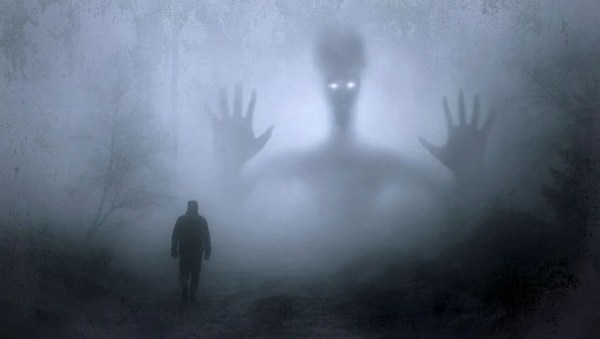
It can be quite difficult to write something truly horrifying. Even in most horror movies, with the added benefit of being able to visibly show their chilling tales, they suffer from cheap jump scares in order to actually scare anyone. So as a horror writer, what are you to do? In this article, we will discuss the basis of fear and what elements you can incorporate into your story to not only make it grimmer but a better story in general.
Creative Characters
Too often in horror are we told the story for the sake of the monster, killer, or threat. The story is functionally written around the antagonist, not the protagonist and thus we are “gifted” with bland, hollow characters that many readers, by the end of the story, wish would just meet their end.
This way of writing is not only a detriment to that character and the story, but also to the villain. If we, as the reader, are going to follow a character through their journey, filled with trials and tribulations, then we must connect with them. We need to hope that they make it through whatever situation they find themselves in, not just watch them go through it.
So now you need to decide what makes a good character, and how do I get people to care? This is not a teen drama book, with boring self insert characters, create someone who has interests of their own, someone who has flaws and their own personal morals.
Create a character who also isn’t just a stereotype or a troupe. If the reader is able to pinpoint a character’s interests and political persuasion just based on what they are wearing or after they speak for the first time. Then it is obvious that though did not go into the making of this person, and they are simply there as another casualty.
While readers may not always agree with the character in the story, it will help to humanize them, making their possible gruesome end far more morbid. Which is great for horror!
Being Alone
Humans are biologically social creatures, and many people fear isolation. Many have even gone insane from types of solitary confinement, so introducing this with the added horror of whatever the story is about, creates another layer of fear and dread within the viewer.
This will also force you as the writer to not incorporate throw-away characters, just to show how scary the threat can be. If you wish to show off whatever your menace will be, do so by having it actually brutally harm your character, or by giving the internal dialogue of how terrified the character is, and by what specifically.
This trope also works great for unique and strange settings. If your threat is of the world or location itself, having your character tepidly explore the ominous environment alone, puts the reader on edge throughout the entire journey. This tactic is great for fluid world and character building.
Famous fiction is built off solitude, and a character’s survival or downfall of it. Often times characters are added, so that the main character can show off their own personality by speaking with them or more prominently, to add to the body count. In many of H.P. Lovecraft’s stories, his characters are reciting their inner thoughts or noting them in a personal diary. Showing that other characters are unnecessary to do so. This also plays into his ever-present anthology of madness and its slow progression throughout the narrative.
Fate Worse than Death
Perhaps it is the dark Millennial/ Gen Z humor that has made death not as bleak or scary. Or perhaps it is due to the emergence of horror as a genre of its own, that makes a character’s death seem like just another Tuesday. Whatever the cause, death in horror is a given, and is harder to make it seem as dark a subject as it does within other genres. So what is a writer to do?
Sometimes in horror fiction, the writer will pose a twisted question of a given fate, such as: if you were to turn into one of the mindless walking dead, featured constantly within the genre. Does your character truly die? Are their minds trapped behind their now blistering grotesque form? Do humans truly have souls and if so, could they be made to suffer even worse than our living existence?
This is the type of threat that keeps the genre fresh and interesting. By having your character try to escape damnation or corruption, the threat is no longer a sweet release but infinite pain. This theme is not just present within zombie fiction, much of what Cronenburg has created are horrid abominations that are far from just being mindless. Instead, they are altered physically and mentally, creating a bastardization of the person or being they were before.
If you do choose to have death be the end-all of the story, then describe the injuries in detail. Gruesome injuries should be written as such and not glanced past. The actual death itself can also be tear-jerking and terrifying if you write death as it truly is, something prolonged, painful, and haunting.
Style and Ambiance
Your verbiage as a writer as well as how you describe things are some of the fundamentals when it comes to creative writing. Many will struggle to use a voice that is not their usual one, but if you are using a type of narration from your character’s perspective, you must learn how to alter your written words to compliment the mood.
Whichever style of narration you end up choosing, you must remember that this book is about something. Try and match the colorful imagery with the era or location that you are writing about. For example, if your work is about Jack the Ripper, you would write in a more fanciful English tone, with descriptions of the damp streets, with a hazy fog that covers the cobblestone buildings. If you were to write in a dialect that is obviously not era-appropriate, it may take the reader out of the immersion.
Creating the book’s specific style will also help in developing the ambiance and overall tone you are setting. If you were to aim for a thriller, you won’t want to use melancholic language, because you want to keep the reader in suspense!
Uniqueness
Ghosts, slashers, and zombies litter the genre, and while some may be successful, there are a hundred more that are just cookie-cutter copies of something someone else has already done. Even creating a new interesting monster isn’t enough, it simply gets clumped into the creature feature category. Many writers will simply put a new spin on one of these constant themes. This may work for some, but truly it is the skill of the writer that makes them successful not the small new detail or twist.
To make something with a recognizable name, something that actually scares someone instead of just using a creative idea from someone in the 18th century, you have to look at the big picture. Is your Big Bad in danger of becoming just another trope? For example, Stephen King’s “It” was extremely popular, one reason was that his creature would be out in broad daylight, leaving the reader realizing the characters are never truly safe.
So does the horror in your writing do something the readers would not expect? Does its desire confound the mind? The reader should not be able to finish writing your story for you, you should always strive to progress the genre not copy it.
Like other genres you must think about the world and characters, and what helps shape what they are. Creating some monster that lives in Nevada is far less interesting than creating a creature that functions off the strange ecosystem of its own alien environment. This helps set the scene and makes the story more believable while still being fiction.
Understanding these concepts and being able to implement them, are some of the foundations of not only horror but also proficient writing in general. While some may be vague concepts, it is up to the creative mind of the writer to flesh them out. These ways to make your story spine-chilling, often flow together, setting the tone for your narrative, and helping to set the scene and the characters. Pushing to develop the plot, and the ideas of the story moving forward.
Horror is the least developed major genre, yet it is the one with the most flexibility. You can incorporate it, into almost any other genre and still have it be a success. However, it can also be one of the hardest to get right, and not everyone will always be scared of the same thing. You must look deeper into humanity than its romance or its comedy, you have to understand human desire and their animalistic fear to actually affect the reader. To have the simple written words on a page, actually, send a shiver from the neck to the spine. That is successful horror.

 Slade Von Parade