
5 Ways to Actually Make Your Horror Story Spine-chilling

It can be quite difficult to write something truly horrifying. Even in most horror movies, with the added benefit of being able to visibly show their chilling tales, they suffer from cheap jump scares in order to actually scare anyone. So as a horror writer, what are you to do? In this article, we will discuss the basis of fear and what elements you can incorporate into your story to not only make it grimmer but a better story in general. 

Creative Characters

Too often in horror are we told the story for the sake of the monster, killer, or threat. The story is functionally written around the antagonist, not the protagonist and thus we are “gifted” with bland, hollow characters that many readers, by the end of the story, wish would just meet their end. 

This way of writing is not only a detriment to that character and the story, but also to the villain. If we, as the reader, are going to follow a character through their journey, filled with trials and tribulations, then we must connect with them. We need to hope that they make it through whatever situation they find themselves in, not just watch them go through it.

So now you need to decide what makes a good character, and how do I get people to care? This is not a teen drama book, with boring self insert characters, create someone who has interests of their own, someone who has flaws and their own personal morals. 

Create a character who also isn’t just a stereotype or a troupe. If the reader is able to pinpoint a character’s interests and political persuasion just based on what they are wearing or after they speak for the first time. Then it is obvious that though did not go into the making of this person, and they are simply there as another casualty. 

While readers may not always agree with the character in the story, it will help to humanize them, making their possible gruesome end far more morbid. Which is great for horror!

Being Alone   

Humans are biologically social creatures, and many people fear isolation. Many have even gone insane from types of solitary confinement, so introducing this with the added horror of whatever the story is about, creates another layer of fear and dread within the viewer. 

This will also force you as the writer to not incorporate throw-away characters, just to show how scary the threat can be. If you wish to show off whatever your menace will be, do so by having it actually brutally harm your character, or by giving the internal dialogue of how terrified the character is, and by what specifically.

This trope also works great for unique and strange settings. If your threat is of the world or location itself, having your character tepidly explore the ominous environment alone, puts the reader on edge throughout the entire journey. This tactic is great for fluid world and character building.

Famous fiction is built off solitude, and a character’s survival or downfall of it. Often times characters are added, so that the main character can show off their own personality by speaking with them or more prominently, to add to the body count. In many of H.P. Lovecraft’s stories, his characters are reciting their inner thoughts or noting them in a personal diary. Showing that other characters are unnecessary to do so. This also plays into his ever-present anthology of madness and its slow progression throughout the narrative.  

Fate Worse than Death

Perhaps it is the dark Millennial/ Gen Z humor that has made death not as bleak or scary. Or perhaps it is due to the emergence of horror as a genre of its own, that makes a character’s death seem like just another Tuesday. Whatever the cause, death in horror is a given, and is harder to make it seem as dark a subject as it does within other genres. So what is a writer to do?

Sometimes in horror fiction, the writer will pose a twisted question of a given fate, such as: if you were to turn into one of the mindless walking dead, featured constantly within the genre. Does your character truly die? Are their minds trapped behind their now blistering grotesque form? Do humans truly have souls and if so, could they be made to suffer even worse than our living existence? 

This is the type of threat that keeps the genre fresh and interesting. By having your character try to escape damnation or corruption, the threat is no longer a sweet release but infinite pain. This theme is not just present within zombie fiction, much of what Cronenburg has created are horrid abominations that are far from just being mindless. Instead, they are altered physically and mentally, creating a bastardization of the person or being they were before. 

If you do choose to have death be the end-all of the story, then describe the injuries in detail. Gruesome injuries should be written as such and not glanced past. The actual death itself can also be tear-jerking and terrifying if you write death as it truly is, something prolonged, painful, and haunting. 

Style and Ambiance 

Your verbiage as a writer as well as how you describe things are some of the fundamentals when it comes to creative writing. Many will struggle to use a voice that is not their usual one, but if you are using a type of narration from your character’s perspective, you must learn how to alter your written words to compliment the mood. 

Whichever style of narration you end up choosing, you must remember that this book is about something. Try and match the colorful imagery with the era or location that you are writing about. For example, if your work is about Jack the Ripper, you would write in a more fanciful English tone, with descriptions of the damp streets, with a hazy fog that covers the cobblestone buildings. If you were to write in a dialect that is obviously not era-appropriate, it may take the reader out of the immersion.

Creating the book’s specific style will also help in developing the ambiance and overall tone you are setting. If you were to aim for a thriller, you won’t want to use melancholic language, because you want to keep the reader in suspense! 

Uniqueness

Ghosts, slashers, and zombies litter the genre, and while some may be successful, there are a hundred more that are just cookie-cutter copies of something someone else has already done. Even creating a new interesting monster isn’t enough, it simply gets clumped into the creature feature category. Many writers will simply put a new spin on one of these constant themes. This may work for some, but truly it is the skill of the writer that makes them successful not the small new detail or twist. 

To make something with a recognizable name, something that actually scares someone instead of just using a creative idea from someone in the 18th century, you have to look at the big picture. Is your Big Bad in danger of becoming just another trope? For example, Stephen King’s “It” was extremely popular, one reason was that his creature would be out in broad daylight, leaving the reader realizing the characters are never truly safe.

So does the horror in your writing do something the readers would not expect? Does its desire confound the mind? The reader should not be able to finish writing your story for you, you should always strive to progress the genre not copy it.

Like other genres you must think about the world and characters, and what helps shape what they are. Creating some monster that lives in Nevada is far less interesting than creating a creature that functions off the strange ecosystem of its own alien environment. This helps set the scene and makes the story more believable while still being fiction.

   Understanding these concepts and being able to implement them, are some of the foundations of not only horror but also proficient writing in general. While some may be vague concepts, it is up to the creative mind of the writer to flesh them out. These ways to make your story spine-chilling, often flow together, setting the tone for your narrative, and helping to set the scene and the characters. Pushing to develop the plot, and the ideas of the story moving forward.

Horror is the least developed major genre, yet it is the one with the most flexibility. You can incorporate it, into almost any other genre and still have it be a success. However, it can also be one of the hardest to get right, and not everyone will always be scared of the same thing. You must look deeper into humanity than its romance or its comedy, you have to understand human desire and their animalistic fear to actually affect the reader. To have the simple written words on a page, actually, send a shiver from the neck to the spine. That is successful horror.

How to Create a Believable Psychopath for Your Novel

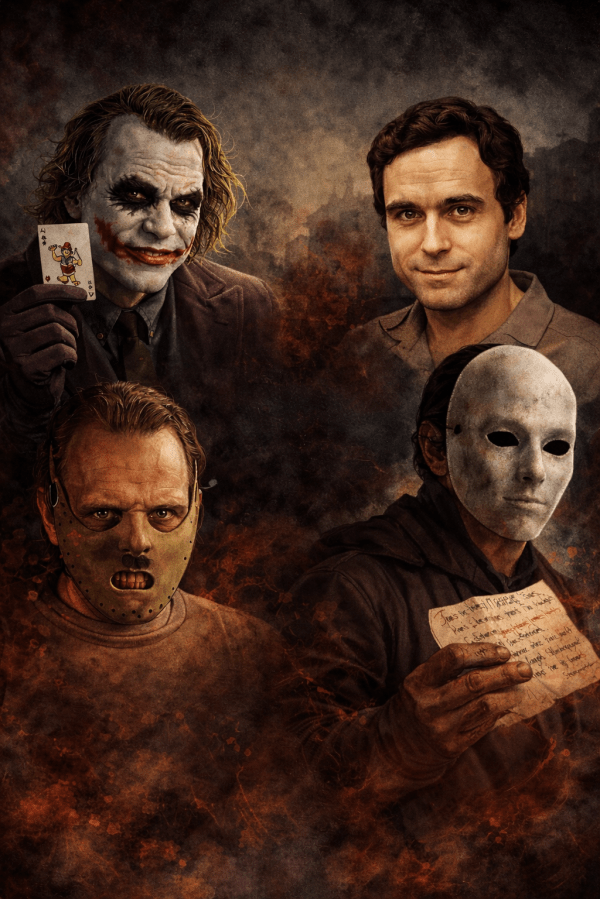
Throughout fiction and non-fiction alike, a certain type of person has made a lasting impact on those who are introduced to them: psychopaths. Whether they be true-to-life killers such as Ted Bundy, or imagined ones like Hannibal Lecter, people always find themselves interested in the complex character archetype. So it would go without saying that creating such characters for your story would give it depth and intrigue. Especially for those creating horror or thrillers. However, the idea of creating such a character and successfully doing so are two separate things. 

Take the bombastic character of the Joker, in The Dark Knight movie played by Heath Ledger. His performance was widely acclaimed and is viewed as an amazing portrayal of the flashy style of a psychopath. On the other hand, the performance by Jared Leto playing the same character in Suicide Squad was widely criticized, not just for the acting, but for the writing of the character. So what was the defining difference between a beloved and a hated character under the same name?

In this article, we will be exploring the founding principles of what makes a realistic psychopath as well as how to create an interesting one. So that when you are writing in your own psycho, he will be a Ledger and not a Leto.

There are many ways to define a psychopath’s characteristics, but for the sake of time, we will be going over three founding principles of a psychopath. 

Lack of Empathy

Psychopathic characters always have a lack of feelings for others, which oftentimes gives them their air of menace. Being able to commit atrocities without feeling any remorse, the mass death of others, committing torture, or even the lack of drive to save someone who was close to them. These characters are not without their own feelings, however. Some will hold their own lives in much more esteem than others, and will often break when their own mortality comes into question. Other characters will desire the protection of their fixation over all else. Such as their “art,” which often is the macabre mutilation of their victims.  

Manipulative

Psychopaths frequently manipulate others, and due to their lack of morality, take no issue with this. This manipulation is often done to uphold their “mask” of being a normal person, persuade their victims, or simply for the pleasure of being better than someone. In their eyes, it is not their fault that others are so gullible or weak as to be manipulated, and some may think that their victims deserve this treatment as recompense for their naivete. 

Attention Seeking

While some psychopaths do have more emotional range than others, there does seem to be a pattern of attention-seeking among them. Some will find enrichment in leaving behind cryptic notes on their identity, making the hunt for a serial killer more exciting for the perpetrator. Others will make their killings an extravagant show. Or perhaps they find pleasure in the intimate experience of the killer and victim. This is all under the same idea that they wish to be seen, in one way or another.

Now that we have an idea of what determines a psychopathic character, it is up to the author to give life to this idea. Simply plopping in a psychopath with the stereotypical tropes, isn’t going to earn the eye of the reader. Like any character, you must flush out their character to devise their placement within the story. However, you must think differently when creating this style of character. To help formulate them, these questions can be used. What role does the psycho play in the story? What does their “mask” look like, compared to the real them? What is the character’s drive, such as needs, fixations, or goals?

Role

One might assume that this psychopath is the antagonist in the story. This is not always the case, even though it is easiest to place them there. You may also see into the distorted mind of the psychopath as the protagonist in some stories. Lastly, and my personal favorite: they will simply be in the story as a side character. 

The psychopathic character also does not even need to be a killer or even a bad person. You simply often find these traits attributed to a psychopath, due to their gravitation toward these actions. This character may find ease in taking a life and have a need to be seen; however, that does not dictate in which way. Oftentimes in actions or thrillers, the main character is a killer, but also deemed a hero. The hero finds it easy to kill, while also adorning the attention of others- how familiar. 

Making the psycho a grey character is another excellent path to choose, showing off the full versatility of the character. Perhaps they are on the villain’s side one moment, and on the protagonist’s the next? They simply have their own will, and find themselves to be of the most importance, so why pledge allegiance to anyone else?

Mask

It may be human nature to feel like you are putting on a show for others, and not showcasing your true personality. Psychopaths know that they are putting on this mask, and do it for their aforementioned traits, in order to manipulate and to garner attention. You must devise almost two separate characters for a psychopath. The personality they show the world, and the personality inside their minds. 

It is very possible that this character never actually shows their true self, even in private with another or even alone. Some will hold tight to their mask, only revealing their true selves inside the narrative of their mind or perhaps for only the author to know, but not acknowledge.

Devising these personalities is a key moment, especially for those whose psycho is the protagonist or antagonist. This dichotomy of the mask-vs-self almost sets the tone for the book in some cases. If this prominent character’s mask shines through and connects with the audience enough, the impact of revealing their true self will be that much more meaningful.

This mask also separates the concept of the characters from the passive ones, such as Hannibal, to that of the Joker. While Hannibal’s mask is that of a thoughtful caring man, the Joker almost literally wears one. The Joker we see is never the man who is actually behind the makeup. You can ascertain the thoughts of the character behind his portrayed personality via the words he says.   

Goal

The desires of this type of character may be hard to grasp and complex. Their minds work differently so their wants and desires may not function the same as our own. This can almost be a twisted biological desire to do things. Some people may get a random voice in their head to do some absurd thing, that is instantly quelled by logic and morals. Instead, however, there is no corrective thought after the instant strange urge to do something, possibly morally wrong.

That is simply the surface level though. Some, while still being a psychopath, have a bigger picture in mind. Perhaps they see the world as wrong, weird, or strange and wish to correct it. Or maybe the character has more human desires and simply just wishes to finally feel safe or happy and needs to find whatever that is for themselves. 

This is another shining moment for the author to create uniqueness for their psychopath and perhaps help develop the story in doing so. For example, if your psycho’s desire is to surround themselves with a horde of people that admire them, whose lives he can manipulate and play with at will, what does he need to do to achieve this? What mask helps him accomplish this? What happens when he achieves this and does this fulfill him if he succeeds? 

Lastly, let’s take a look at some psychopaths in media to draw inspiration from. Just remember to simply take inspiration and not copy outright. 

The Master- Doctor Who 

The Master is a character throughout Doctor Who, but let’s narrow the lens to his appearance in season 3 of modern Doctor Who. He is a lively and comedic character in his mask, but internally he is a sadistic man plagued by “the sound of war” which is often heard as a drum beat in his head. This is an excellent show of a psychopath, that also creates the character open enough to see all sides of him.

He lacks empathy almost to an inverse level, finding joy in the pain of others, so much so that it is nearly his goal to do so. His stated goal, however, is to control the universe, which can be deduced as his need to be seen by all. His role is obviously that of an antagonist, but he still shares a strange connection with The Doctor, giving more complexity to his character than just a villain. He is also seen manipulating others with not only his charmful personality – his mask- but in true Doctor Who fashion of subliminal mind control. 

The Governor- The Walking Dead

The Governor is the first true antagonist in the show, other than the hordes of zombies wandering around. He is seen by the people under him as a charismatic leader who knows how to get the job done, while those who go against him- or even those caught on his warpath- find a calloused and heartless killer who simply wishes to control everyone. If he does not get his way, he will sacrifice all his pawns just so that others suffer for defying him.

The Governer easily ticks all the boxes almost immediately upon encountering him in the show. His lack of empathy for killing those who are innocent and guilty alike without any remorse. His manipulation of an entire town who unknowingly follows him to kill others who are innocent, and that he disposes of at his own digression. Lastly, his need for attention, from the same denizens of his town that he needs to look up to him. Making him an obvious psychopath, but a prominent one. 

Daenerys Targaryen- Game of Thrones

Yes, everyone’s favorite mother of dragons is indeed a psychopath and a more discreet one at that. Her role was that of a protagonist throughout most of the show, while at the end immediately reversed. Since this is a more complex example I will go into more detail for this one.

Her lack of empathy can be confusing throughout the show, you see her care for those close to her while also throwing thousands of lives away simply because she was angry or wanted to get her way, even those who she portrayed as close to her. Her attachment to these people was not from human connection, but as beloved belongings. 

Her manipulation of these people seemingly fell into her lap throughout the show, perhaps it was her doing perhaps it was her luck, but most likely it was both. Near the end of the series, she had dragons, lords, and armies of several nations under her command. 

“Daenerys Stormborn of the House Targaryen, First of Her Name, the Unburnt, Queen of the Andals and the First Men, Khaleesi of the Great Grass Sea, Breaker of Chains, and Mother of Dragons” -if her attention seeking was not evident. 

Her role was that of a hopeful protagonist to go against the surmounting enemies throughout the series, and in fact, she does so. That is, until the end of the series, when she has lost too many of her “possessions” and has decided that she no longer wishes to keep holding onto her mask and does away with enemies and allies alike. 

Her mask was that of a caring queen who wishes to free slaves and save the world. Unfortunately, her actual purpose in doing many of her actions was to have control over more and more.

Her goal was obvious: to be the ruler of the seven kingdoms.

These characters are all prominent within highly famous media. Some are obvious examples, while others require more depth to perceive. Since this article was focused on the writing of these characters, you must show a purposeful amount of what you wish to reveal about your psychopath. To make a memorable meaningful character, one must delve into the mind of the psychopath. Just remember to find your way out when you’re done.

Monster Hunting for Dummies: CH 1

(The Neebs Gaming Inspired Monster Hunting Web Series)

Chapter 1: Small Town Big Problems

Cruising down the empty highways of the midwest, a dark blue 1965 Plymouth Barracuda hums. The land is flat, with sporadic trees and billboards along the road. The sun beats down, as it does for most of the year. The Plymouth passes a sign that says “11 Miles to Chillicothe.”

Inside the car sit two men: one is a well-groomed man in his 40’s, rocking a young Col. Sanders look. While the other is in his late 50’s with a horseshoe mustache and curly, balding hair. The older man looks out the window with a bored expression, whilst munching on a large sub-sandwich. The younger man peers at his ride-along who is quickly filling the otherwise clean car with hordes of crumbs.

“Pete can you please, fucking, not fill my car with the debris of your goddamn sandwich?”

Pete quickly turns his head, with the ingredients of the sub filling his facial hair. “What?!” Pete shouts, defensively, spraying the other man with chewed food particles.

The car veers slightly, before quickly correcting itself. 

“Ah! God, what the fuck Pete? If I wasn’t wearing these sunglasses I’d be fucking blind!”

“I’m just eating my sammich!”

“Can you not wait till after the job? Or at least not while you’re in my car! I swear I always have to clean up after you ride with me.”

Pete continues eating his sandwich and rests back in his seat, facing away from the annoyed driver. “So, what’s this place called again, the town we’re going to?” Pete asks while making chewing noises.

The driver, giving up on the argument, says, “Some tiny town in the middle of nowhere. You know, where old people go to die. Hey, maybe we should drop you off there, Pete.” The driver glances at his companion with a shit-eating grin.

“Yeah, yeah, I get it, I’m old, haha.” Pete continues to look out the window, resisting the goad.

Silence passes through the car for only a moment before Pete speaks up again. “So Jed, remind me what the job is supposed to be here again?”

Jed stares at Pete, almost dumbfounded. “I swear to god, Pete, you have Alzheimers.”

“No! I just don’t fucking listen!”

“That’s not better, you old asshole!”

“Can’t you just tell me what it is without crawling up my ass?!”

“Why should I, how am I supposed to know if you’re paying attention this time or not?!”

As the two argue, a blue flip phone rings from a cupholder in the car.

Jed grabs the phone, and answers it, “Yo.” 

A man with a high-pitched voice and a thick southern accent comes through the phone. “Hey, Jed, I got you on speaker.” Another voice comes through, a soothing deep voice with an accent that is hard to pin down. “Heyo, how you doin’?”

“Hey, guys what’s up? Hope your ride is going better than mine,” Jed says whilst glaring at Pete.

The man with the thick southern accent says, “Yeah all good under the hood. We’re just letting you know to turn off at this next exit.”

“Alllrighty,” Jed says.

The Plymouth turns off at the exit, followed by a white 1996 Dodge 2500 Passenger Van and another man driving a 2001 Harley Davidson with a side car attachment. The small caravan of vehicles all stop at the entrance of the small town that looks as if it was under attack by a group of pyromaniacs. 

The men all start exiting their vehicles and gathering their gear. Pete and Jed walk up to the two other men whom they were speaking with over the phone, who were driving the van. The van doors swing open. From the driver’s side stands a tall lanky man with a green tank top that once held the name of a band, but is now too worn to recognize. On the other side of the van a large, muscly, ethnically ambiguous man with drowsy eyes, slowly hops out of the passenger seat. He sees his compatriots approach and waves a large hand. 

Jed walks up to the two, “Hey Aut, I got a question for you. Why is it that whenever we get to some place for a job it’s always on fire? Like it doesn’t even matter what the issue is. Does some guy just feel the need to start lighting shit on fire?”

Aut looks to the town ahead of them, seeing no one in sight, with looted buildings and several fires indiscriminately across the ruined town. “I don’t know, my first instinct would be to hotwire some car, and get the heck out.”

The large man looks at the town as well. “Maybe they were cold,” he says trying to hold back a laugh from his own joke. 

Meanwhile, in the background, Pete takes a piss right next to the Harley motorcycle. 

The young man who was driving the bike immediately starts yelling at Pete. “Why, Pete? Go piss somewhere else!”

“What the hell do you want me to do, walk into one of the gas stations that are on fire?!”

“No, just don’t piss right next to my bike!”

The German Shepard that was riding in the sidecar hops out, and lifts its leg right against the bike, almost as if following Pete’s lead. 

The biker says almost defeated, “oh…just magical, thanks for teaching Caine a new trick Pete.”

Pete, continuing to pee, says, “Yeah, don’t mention it, kid.”

As the group continues its banter, a lone, shambling man, walks toward the group. His eyes are blood-red, with limbs just barely holding on. The man lets out an inhuman wailing moan.

Pete looking over his shoulder, while continuing to use the restroom says, “Ooohh, it’s zombies.”

Jed calls out to the group, “Alright everyone, let’s gear up, it seems like it’s just the slow ones, so no hurry.”

The zombie meanders towards the group as they gather their weapons and ammo. Aut walks up to his large ride-along, “Hey Em, have you seen my machete? I swear I had it next to Damion’s shotgun in the van but I didn’t see it.”

Emory gestures over to the Plymouth, “Yeah, remember you put it in Jed’s car after the werewolf job?”

“Oh shit, you’re right! Good lookin’ out!”   

The zombie, now closer to the group, starts flailing its more attached arm towards the gang. The group almost ignoring the very slow threat continues gathering their gear.

The biker walks up to Aut and Emory, followed by Caine. “Why do these towns even end up like this? Like, I would understand if it was the fast ones or the abnormals, but these Romero zoms are just laughable.”

Aut actually ponders the question and starts to give a genuine response, but is cut off by Jed, who shouts: “It’s ‘cause people are idiots!”

The zombie is now within 10 feet of the group, the biker quickly takes out a revolver and fires off two rounds into its head, turning the zombie’s face into a spaghetti-like substance.

Emory looks at the dead ghoul with a queasy face, “Why do you always shoot twice, Damion?”

Damion, reloading the used shots, says, “What, never heard of double-tap?”

Emory looks back at the creature with nearly no head. “I don’t know, seems a bit like overkill is all.”

The shot, echoing through the town, starts to bring the rest of the zombies out of the woodwork.

The group all line up and draw their guns. Jed looks to his compatriots, “Alright everybody, time your shots, and make sure they hit… ammo’s ‘spensive.”

Over the next ten minutes, the group stays in formation and lights up the town with shotgun, sniper, and rifle shots, obliterating any zombie that crawls out of any hide. At some point, Aut had turned on one of the car radios to play Let’s Stick Together, by Bryan Ferry.

The poor townspeople who have now turned into the walking dead, crawl from under cars, bash through windows, and some fall from rooftops. Each zombie tries to limp towards their next meal, but those far off from their target, get snipped from Emory’s McMillan TAC-50. The main mass of the creatures staggering towards the gang quickly get turned into swiss cheese from Jed’s HK33 and Pete’s Smith & Wesson Model 29.  The lucky few, who manage to get within 10 feet of them are hit by Damion’s Mossberg Maverick 88 Pump-Action Shotgun and Aut’s custom pipe gun. 

As the noise of the guns start to die down, and the last zombie wails its final moan, the group stands victories over several mounds of still warm ammo. Damion immediately starts looking around the town and looting the bodies of the recently re-deceased.

Aut, calls out to his younger friend, “Hey! Stop takin’ stuff ‘till we find out if there’s any survivors!”

Damion with his motorcycle helmet still on, quickly looks to his left and right, and then immediately goes back to rummaging through coat pockets. “Nope, no survivors.”

“What if your stealin’ from someone’s gran-gran?!”

“Nope, this one’s a guy.”

“You know that’s not what I mean!”

Meanwhile, Jed walks through the town streets with the rest of the group following behind him. “Hey, if anyone’s still alive out there, you should make yourself known, otherwise the kid’s gonna start hauling off everything not bolted down.”

An older man emerges from a small fortified auto shop. “Where did you all come from? D-did the government send you?”

Jed lowers his eyelids and holds back from rebuffing such a stupid question. Most of his group look like they just came back from some kind of trucker convention. “Dude, do we seriously look like we’re one of those M.I.B. motherfuckers?”

The old man takes another good look at his odd saviors, “I, uh, I guess not.”

“You all there is? Got a ride? If not we can take you to the next town over, but I would advise against staying here.” 

“W-why is that?”

“‘Cause those M.I.B. guys I just mentioned usually don’t treat lone survivors the nicest. Let’s just say they don’t usually pay people for their silence.”

Pete chimes in from behind Jed, “Usually just send them to the great big farm in the sky.”

Emory looks dryly at Pete, “Wow, man.”

“What?!”

The old man looks down, with a slightly tired and nervous expression. “I-I’ve got a car, t-thank you again.”

The old man walks back into his auto shop, seemingly packing his bags. The rest of the group follow Damion’s lead and start gathering cash and supplies from the now ghost town.

Emory walks up to Jed, with the slight grin he makes right before telling a joke. “Hey Jed, guess what the name of this place is.”

Jed looks up for a second, presumingly trying to explore his imagination. “Burny town?”

Emory chuckles slightly still trying to hold in his joke. “N-no, i-its Mass-evil.”

Jed looks to Emory, obviously not buying the bullshit that he just spewed. “No fucking way this place is called Mass-evil.”

The two walk over to the nearby sign that shows the name of the town, Massieville.

“Well, I’ll be damned.”    

5 Ways to Actually Make Your Horror Story Spine-chilling

It can be quite difficult to write something truly horrifying. Even in most horror movies, with the added benefit of being able to visibly show their chilling tales, they suffer from cheap jump scares in order to actually scare anyone. So as a horror writer, what are you to do? In this article, we will discuss the basis of fear and what elements you can incorporate into your story to not only make it grimmer but a better story in general. 

Creative Characters

Too often in horror are we told the story for the sake of the monster, killer, or threat. The story is functionally written around the antagonist, not the protagonist and thus we are “gifted” with bland, hollow characters that many readers, by the end of the story, wish would just meet their end. 

This way of writing is not only a detriment to that character and the story, but also to the villain. If we, as the reader, are going to follow a character through their journey, filled with trials and tribulations, then we must connect with them. We need to hope that they make it through whatever situation they find themselves in, not just watch them go through it.

So now you need to decide what makes a good character, and how do I get people to care? This is not a teen drama book, with boring self insert characters, create someone who has interests of their own, someone who has flaws and their own personal morals. 

Create a character who also isn’t just a stereotype or a troupe. If the reader is able to pinpoint a character’s interests and political persuasion just based on what they are wearing or after they speak for the first time. Then it is obvious that though did not go into the making of this person, and they are simply there as another casualty. 

While readers may not always agree with the character in the story, it will help to humanize them, making their possible gruesome end far more morbid. Which is great for horror!

Being Alone   

Humans are biologically social creatures, and many people fear isolation. Many have even gone insane from types of solitary confinement, so introducing this with the added horror of whatever the story is about, creates another layer of fear and dread within the viewer. 

This will also force you as the writer to not incorporate throw-away characters, just to show how scary the threat can be. If you wish to show off whatever your menace will be, do so by having it actually brutally harm your character, or by giving the internal dialogue of how terrified the character is, and by what specifically.

This trope also works great for unique and strange settings. If your threat is of the world or location itself, having your character tepidly explore the ominous environment alone, puts the reader on edge throughout the entire journey. This tactic is great for fluid world and character building.

Famous fiction is built off solitude, and a character’s survival or downfall of it. Often times characters are added, so that the main character can show off their own personality by speaking with them or more prominently, to add to the body count. In many of H.P. Lovecraft’s stories, his characters are reciting their inner thoughts or noting them in a personal diary. Showing that other characters are unnecessary to do so. This also plays into his ever-present anthology of madness and its slow progression throughout the narrative.  

Fate Worse than Death

Perhaps it is the dark Millennial/ Gen Z humor that has made death not as bleak or scary. Or perhaps it is due to the emergence of horror as a genre of its own, that makes a character’s death seem like just another Tuesday. Whatever the cause, death in horror is a given, and is harder to make it seem as dark a subject as it does within other genres. So what is a writer to do?

Sometimes in horror fiction, the writer will pose a twisted question of a given fate, such as: if you were to turn into one of the mindless walking dead, featured constantly within the genre. Does your character truly die? Are their minds trapped behind their now blistering grotesque form? Do humans truly have souls and if so, could they be made to suffer even worse than our living existence? 

This is the type of threat that keeps the genre fresh and interesting. By having your character try to escape damnation or corruption, the threat is no longer a sweet release but infinite pain. This theme is not just present within zombie fiction, much of what Cronenburg has created are horrid abominations that are far from just being mindless. Instead, they are altered physically and mentally, creating a bastardization of the person or being they were before. 

If you do choose to have death be the end-all of the story, then describe the injuries in detail. Gruesome injuries should be written as such and not glanced past. The actual death itself can also be tear-jerking and terrifying if you write death as it truly is, something prolonged, painful, and haunting. 

Style and Ambiance 

Your verbiage as a writer as well as how you describe things are some of the fundamentals when it comes to creative writing. Many will struggle to use a voice that is not their usual one, but if you are using a type of narration from your character’s perspective, you must learn how to alter your written words to compliment the mood. 

Whichever style of narration you end up choosing, you must remember that this book is about something. Try and match the colorful imagery with the era or location that you are writing about. For example, if your work is about Jack the Ripper, you would write in a more fanciful English tone, with descriptions of the damp streets, with a hazy fog that covers the cobblestone buildings. If you were to write in a dialect that is obviously not era-appropriate, it may take the reader out of the immersion.

Creating the book’s specific style will also help in developing the ambiance and overall tone you are setting. If you were to aim for a thriller, you won’t want to use melancholic language, because you want to keep the reader in suspense! 

Uniqueness

Ghosts, slashers, and zombies litter the genre, and while some may be successful, there are a hundred more that are just cookie-cutter copies of something someone else has already done. Even creating a new interesting monster isn’t enough, it simply gets clumped into the creature feature category. Many writers will simply put a new spin on one of these constant themes. This may work for some, but truly it is the skill of the writer that makes them successful not the small new detail or twist. 

To make something with a recognizable name, something that actually scares someone instead of just using a creative idea from someone in the 18th century, you have to look at the big picture. Is your Big Bad in danger of becoming just another trope? For example, Stephen King’s “It” was extremely popular, one reason was that his creature would be out in broad daylight, leaving the reader realizing the characters are never truly safe.

So does the horror in your writing do something the readers would not expect? Does its desire confound the mind? The reader should not be able to finish writing your story for you, you should always strive to progress the genre not copy it.

Like other genres you must think about the world and characters, and what helps shape what they are. Creating some monster that lives in Nevada is far less interesting than creating a creature that functions off the strange ecosystem of its own alien environment. This helps set the scene and makes the story more believable while still being fiction.

   Understanding these concepts and being able to implement them, are some of the foundations of not only horror but also proficient writing in general. While some may be vague concepts, it is up to the creative mind of the writer to flesh them out. These ways to make your story spine-chilling, often flow together, setting the tone for your narrative, and helping to set the scene and the characters. Pushing to develop the plot, and the ideas of the story moving forward.

Horror is the least developed major genre, yet it is the one with the most flexibility. You can incorporate it, into almost any other genre and still have it be a success. However, it can also be one of the hardest to get right, and not everyone will always be scared of the same thing. You must look deeper into humanity than its romance or its comedy, you have to understand human desire and their animalistic fear to actually affect the reader. To have the simple written words on a page, actually, send a shiver from the neck to the spine. That is successful horror.       

Blog at WordPress.com.

Up ↑